PVD Vacuum Coating Machine
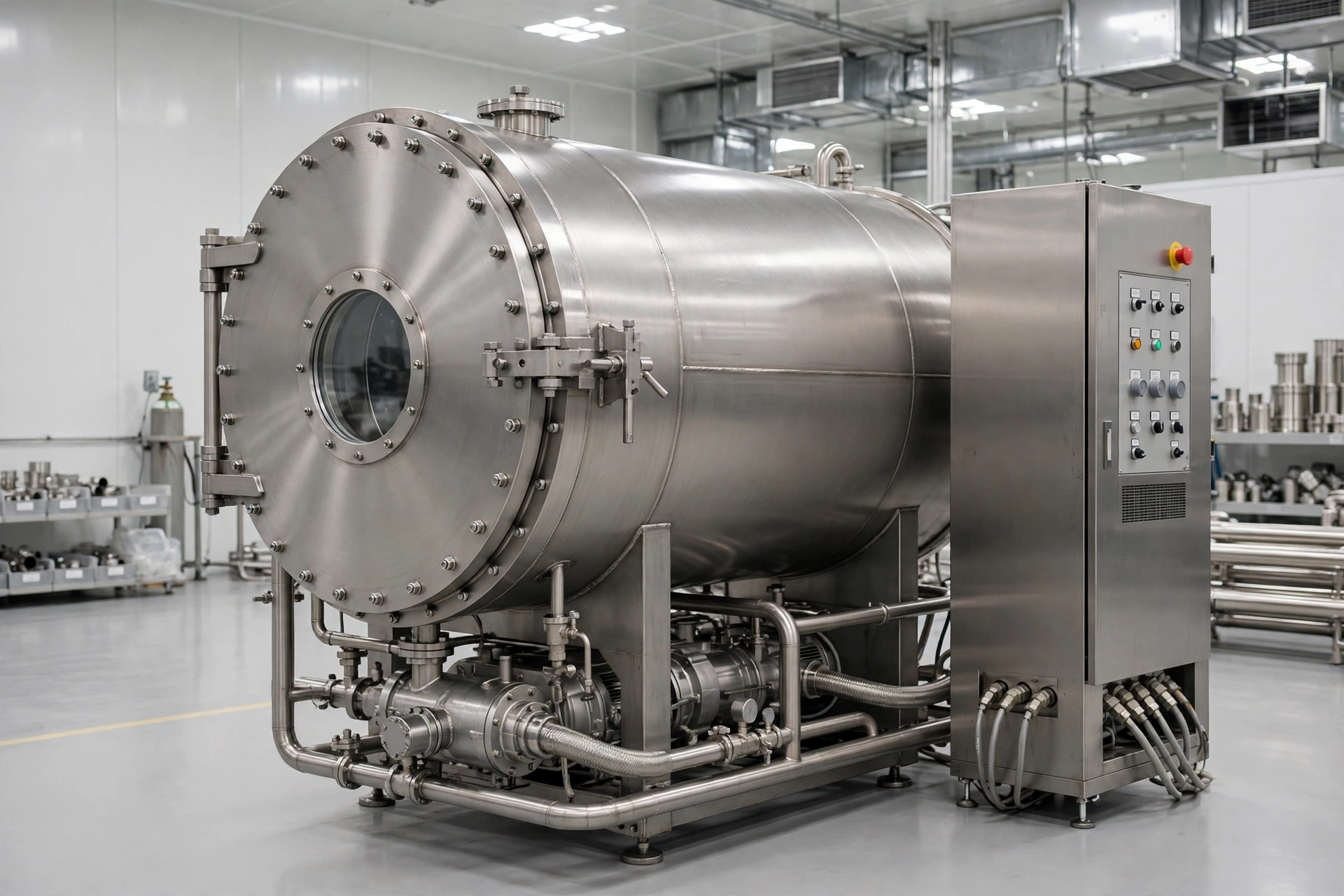
PVD vacuum coating deposits a thin metallic film on parts inside a vacuum chamber — the finish behind metallic-looking plastic and hardware. Lynvex supplies both evaporative and multi-arc ion PVD machines.
Home › PVD Vacuum Coating Machine
PVD vacuum coating deposits a thin metallic film on parts inside a vacuum chamber — the finish behind metallic-looking plastic and hardware. Lynvex supplies both evaporative and multi-arc ion PVD machines.
Evaporative PVD vaporises the coating material with heat; multi-arc ion PVD strikes arcs on a target and deposits a harder, denser film. Evaporative builds suit decorative finishes on plastics; multi-arc suits harder functional and decorative films on metal parts. Chamber size and batch fixturing set your throughput in both cases.
| Factor | Evaporative PVD | Multi-arc ion PVD |
|---|---|---|
| Film character | Decorative metallic finish | Harder, denser film |
| Typical parts | Plastic parts, decorative hardware | Metal hardware, tools, wear parts |
| Choice driver | Appearance and cost | Hardness and durability spec |
Send the part material and size, the coating colour or film you want, and your batch volume per day. PVD is a batch process, so chamber loading — how many parts fit per cycle — is the number that decides your real output.
This equipment is supplied with a 12-month warranty. Spare wear parts (guns, nozzles, filters, belts) are listed in the quotation so you can stock them at commissioning.
Complete lines serve factories where coating is a core process rather than a side station: metal furniture and hardware, plastic housings at volume, building components and mixed production that runs all day. The line's value is flow — parts enter raw and leave finished, with no trolleys of half-done work waiting between a booth here and an oven across the building.
Line projects fail on interfaces, not on individual machines: conveyor hand-offs, booth openings, oven entry seals and control handshakes between sections. That is why a line proposal states every section's size and the spaces between them, and why the layout is drawn against your workshop before prices are fixed.
Two routines protect a line's output. The first is loading discipline: hangers and fixtures must present parts at the spacing the spray programs assume, or film build varies along the line. The second is staged cleaning: booths, guns and oven filters each have their own interval, and a single missed interval usually shows up as finish defects a shift later. Commissioning includes a maintenance schedule per section, sized to your coating and shift pattern.
Colour is set by film material and process parameters. Send a sample or a colour reference and the configuration will be checked against it.
Send your part drawings, part size and output target. We will confirm the machine or line configuration and reply with a quotation.