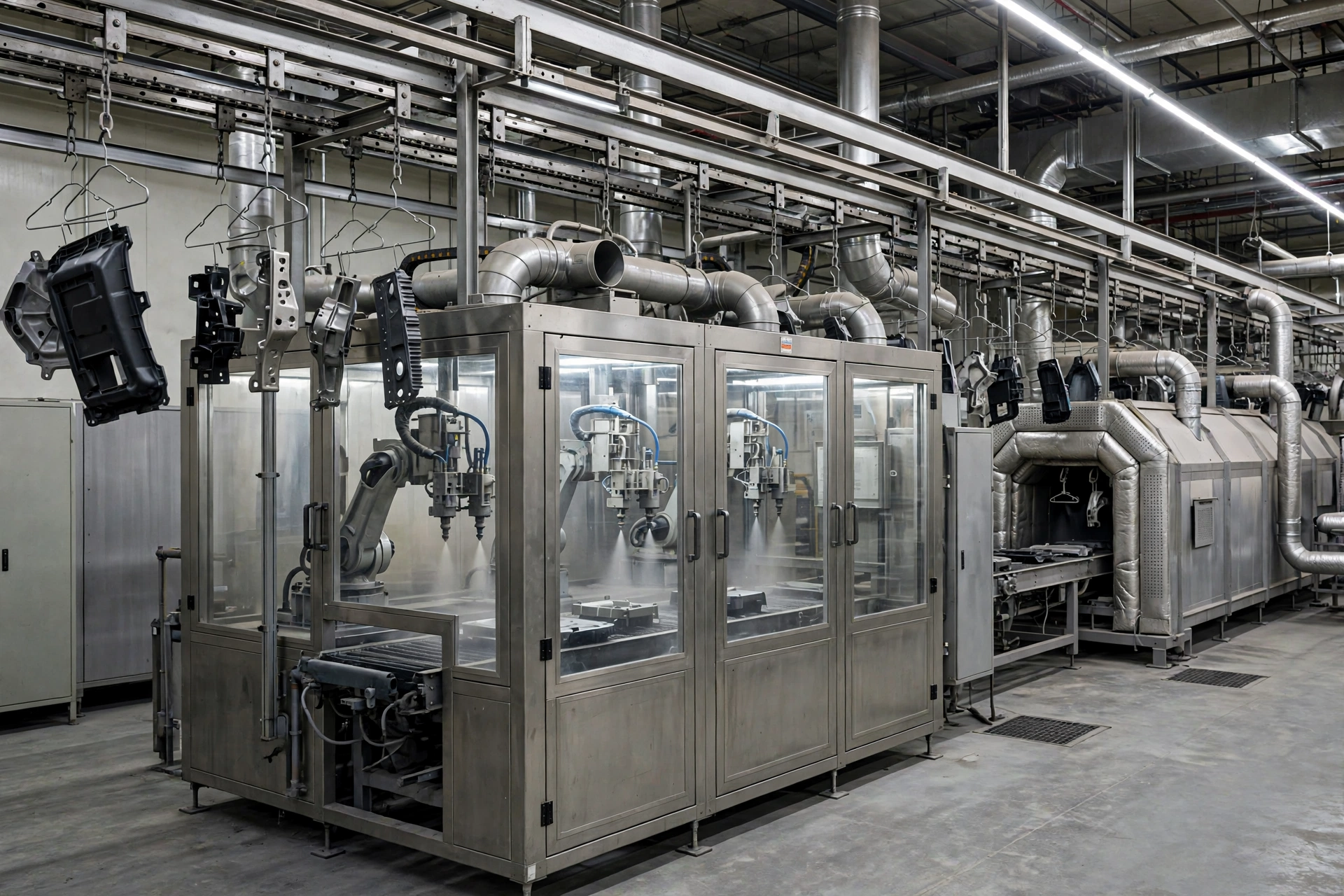
What a complete line includes
A typical line combines loading, surface pretreatment or dust removal, one or more spray booths with automatic guns or robots, a flash-off zone, a drying or curing oven, cooling and unloading. Conveyor type (overhead chain, floor conveyor or belt) follows from part weight and size. Powder coating lines and liquid paint lines share this structure but differ in booth recovery and curing provisions; the powder line has its own detail page.
| Line section | Purpose | Sized by |
|---|
| Pretreatment / dust removal | Clean surface for adhesion | Part material and coating spec |
| Spray booths | Automatic coating application | Part size, guns or robot, takt time |
| Flash-off | Solvent release before curing | Coating supplier's window |
| Drying / curing | Oven or UV section cures the film | Coating cure schedule |
| Conveyor | Moves parts through every stage | Part weight, size and line speed |
Layout inputs we need from you
Line layout is a floor-plan exercise: available length and width, ceiling height, where parts enter and leave, and utilities decide what fits. If your building cannot take a straight line, U-shaped and loop layouts are routine. Send a simple workshop sketch with your inquiry and the proposal will be drawn against it.
Application scope
Complete lines serve factories where coating is a core process rather than a side station: metal furniture and hardware, plastic housings at volume, building components and mixed production that runs all day. The line's value is flow — parts enter raw and leave finished, with no trolleys of half-done work waiting between a booth here and an oven across the building.
Line projects fail on interfaces, not on individual machines: conveyor hand-offs, booth openings, oven entry seals and control handshakes between sections. That is why a line proposal states every section's size and the spaces between them, and why the layout is drawn against your workshop before prices are fixed.
Running a line well
Two routines protect a line's output. The first is loading discipline: hangers and fixtures must present parts at the spacing the spray programs assume, or film build varies along the line. The second is staged cleaning: booths, guns and oven filters each have their own interval, and a single missed interval usually shows up as finish defects a shift later. Commissioning includes a maintenance schedule per section, sized to your coating and shift pattern.
What to send for a configured quotation
- Part drawings or photos, with the largest part size (L x W x H)
- Coating type and finish requirements (colour, gloss, film thickness if specified)
- Required output: parts per hour or per shift, and working hours per day
- Destination country and local power supply (voltage / frequency)
- Workshop space available for the machine or line, if a full line is planned
Buyer questions
Can a line be built in stages?
Yes. Many buyers start with booths and a drying section on a conveyor and add pretreatment or a second booth later. Tell us your phase plan so the conveyor and controls allow for it.
Liquid paint or powder?
Both line types are built. The detail pages separate them: see the powder coating line page for the powder process stages.
Not sure which configuration fits?
Send your part drawings, part size and output target. We will confirm the machine or line configuration and reply with a quotation.
Send an Inquiry