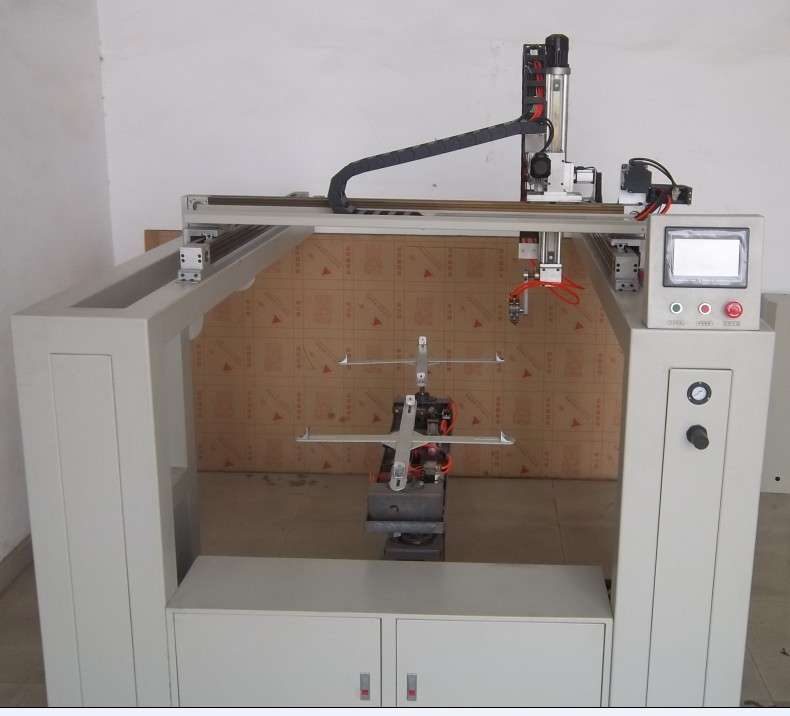
Machine specification
The five-axis machine specification: total power 4 kW, positioning accuracy within plus or minus 1 mm, gun horizontal travel of 0 to 180 degrees, a WA-101 automatic gun with 1.0 mm calibre, and storage for 160 spray programs. Disc count and fixture design are configured to your parts.
| Parameter | Value |
|---|
| Total power | 4 kW |
| Positioning accuracy | ±1 mm |
| Gun horizontal travel | 0–180° |
| Spray gun | WA-101 automatic gun, 1.0 mm calibre |
| Stored programs | 160 |
Which parts suit a five-axis machine
Moulded housings, helmets, sanitary ware, laptop shells and similar parts with faces at several angles are the core application. Flat parts also run well, which is why five-axis is the usual step up when a single-axis machine starts leaving edges thin. If your parts are deeper and more complex, compare the six-axis machine; if they are flat, the single-axis machine is the economical choice.
Service and warranty
This equipment is supplied with a 12-month warranty. Spare wear parts (guns, nozzles, filters, belts) are listed in the quotation so you can stock them at commissioning.
Application scope
Axis spray machines serve production where the same part repeats thousands of times: consumer electronics housings, helmets and protective gear, sanitary ware, toys and moulded plastic or metal components. The economic logic is repeatability — once the gun path, distance and speed are set for a part, every cycle repeats them, so film thickness stays even and paint consumption per part can be measured and tuned.
Two operating habits decide results more than the machine class does. First, fixture design: a part that sits 2 mm differently each cycle sprays differently each cycle. Second, gun maintenance: a worn nozzle changes the fan pattern long before it fails outright, so nozzle checks belong in the weekly routine. Both points are covered when a configuration is commissioned.
Pairing with booths and curing
An axis machine is one station in a process. Upstream, parts usually need cleaning or electrostatic dust removal, especially moulded plastics that carry static. Downstream, the coating decides the next step: air-dry paints need flash-off space, baked enamels need an oven, UV coatings need a curing section. When you request a quote, name the equipment you already own for these stages; the machine will be specified to feed it, including conveyor height and part hand-off.
What to send for a configured quotation
- Part drawings or photos, with the largest part size (L x W x H)
- Coating type and finish requirements (colour, gloss, film thickness if specified)
- Required output: parts per hour or per shift, and working hours per day
- Destination country and local power supply (voltage / frequency)
- Workshop space available for the machine or line, if a full line is planned
Buyer questions
Single, double or four discs — which do I need?
Disc count is throughput and changeover logic: more discs let one part load while another sprays. Send your cycle-time target and part count per shift.
Is an explosion-proof build available?
Yes, explosion-proof five-axis builds are part of this family. State the coating type in your inquiry so the build is specified correctly.
Not sure which configuration fits?
Send your part drawings, part size and output target. We will confirm the machine or line configuration and reply with a quotation.
Send an Inquiry