Water Curtain Spray Booth Design
Water curtain spray booth design balances booth size, airflow and the water curtain itself. This guide explains how those factors interact and what to confirm before ordering.
Home › Water Curtain Spray Booth Design
Water curtain spray booth design balances booth size, airflow and the water curtain itself. This guide explains how those factors interact and what to confirm before ordering.
Booth internal size is the largest part plus working clearance: room for the gun to keep its spraying distance, room for the part to rotate or pass on a conveyor, and room for the operator if spraying is manual. Undersized booths show up as overspray on the finish and paint build-up on the walls near the part.
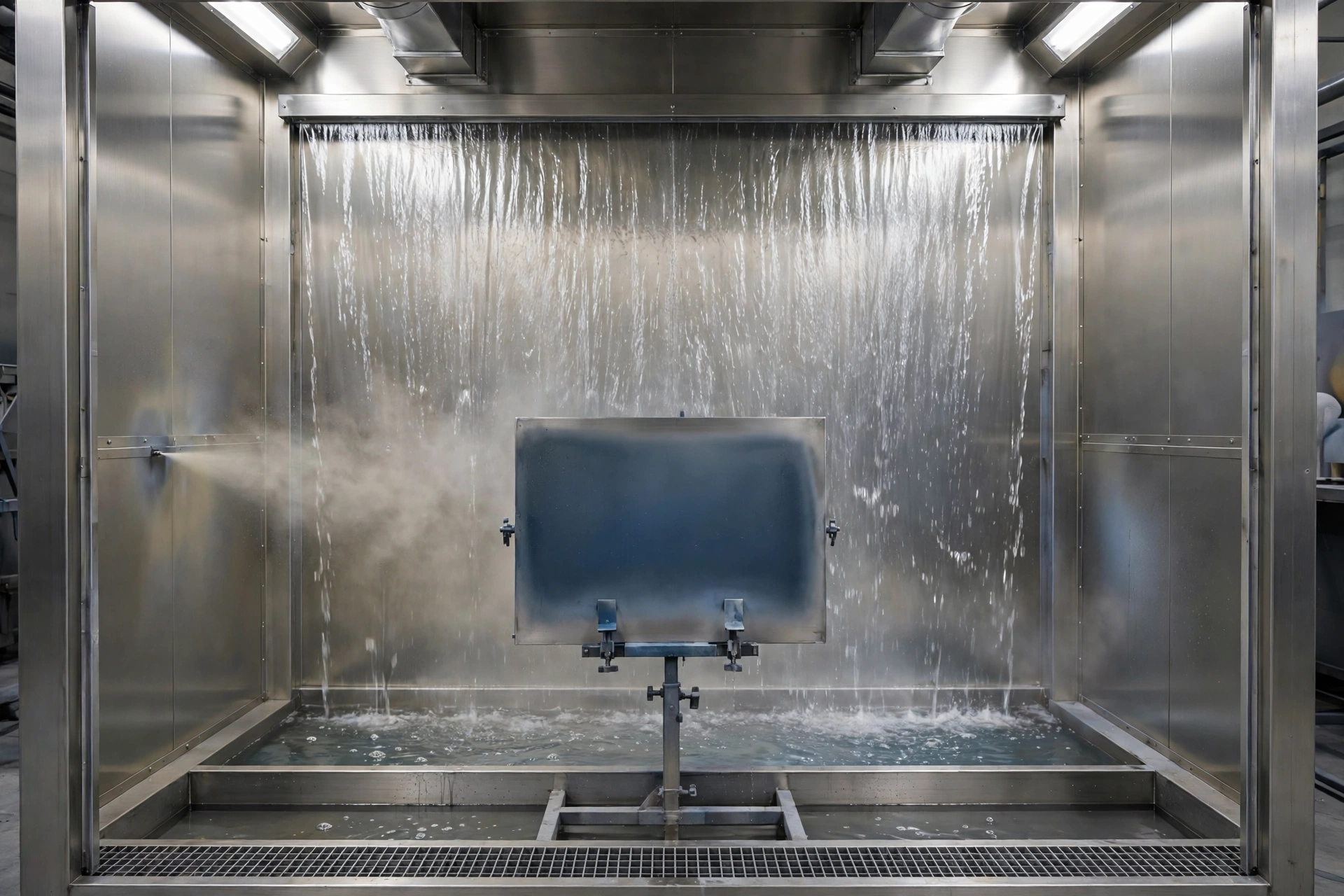
Extraction must move air across the booth face fast enough to carry overspray to the curtain without disturbing the spray pattern. The curtain itself needs even flow over the whole back panel: dry patches let paint stick and harden, which then breaks the sheet. Design checks therefore pair the fan size with the tank, pump and panel geometry, not with the booth's outer dimensions.
Confirm where the booth's extracted air can discharge, how sludge will be removed and disposed of under your local rules, and what happens at colour change — curtain booths forgive colour changes better than dry-filter booths, but the tank still accumulates mixed sludge. State your paint type and colours per day in the inquiry.
Design does not end at the booth walls. Curtain water accumulates paint solids that must be skimmed, filtered or treated before discharge, and the right arrangement depends on your paint chemistry and local discharge rules. Ask for the sludge handling options at quotation stage; retrofitting them into a finished installation is disproportionately expensive.
Take a booth for parts up to two metres wide on a conveyor. The internal width must clear the part, the gun's working distance on both sides and the conveyor's guides; the height must clear the part plus hanger. Extraction is then sized to hold the design face velocity across that opening at your paint usage, and the curtain pump and tank are sized to keep the back panel fully wet at that airflow. Each number follows from the previous one, which is why booth quotations that start from a price list of standard sizes so often disappoint: the standard size was derived from somebody else's part.
The same logic runs in reverse for stand-alone manual booths: the operator's reach and the largest part carried through the door set the size, and the door itself is a design item buyers forget until the first large part arrives.
Send part drawings, coating type and output target through the inquiry page; the reply will confirm the configuration and quotation.
Send your part drawings, part size and output target. We will confirm the machine or line configuration and reply with a quotation.