How a UV Finishing Line Works
A UV finishing line works stage by stage through dust removal, spraying, levelling and UV curing. This guide explains each stage and the checks buyers should run before ordering.
Home › How a UV Finishing Line Works
A UV finishing line works stage by stage through dust removal, spraying, levelling and UV curing. This guide explains each stage and the checks buyers should run before ordering.
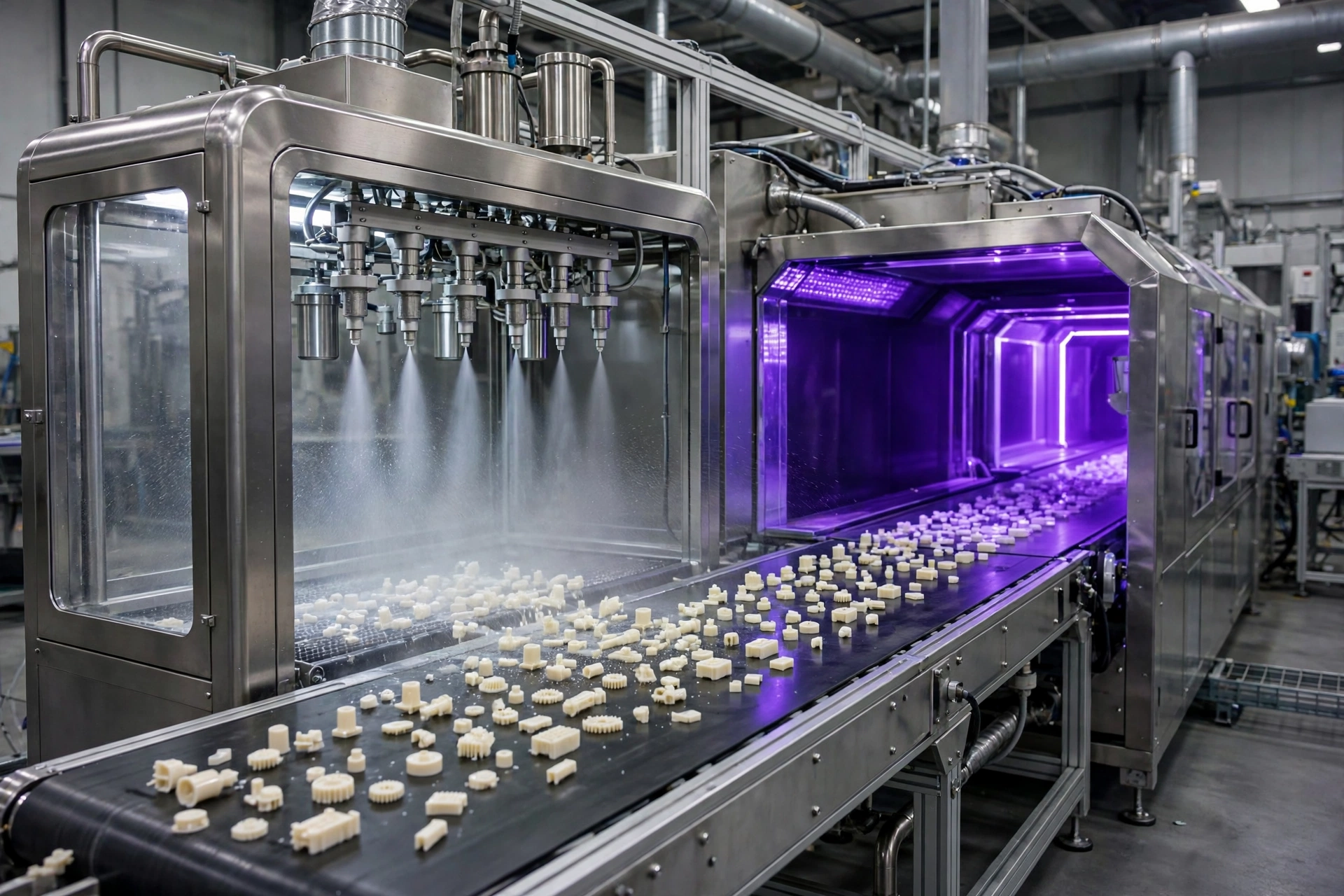
Dust removal comes first because UV films are glossy and show every particle; ionised air handles the static that makes plastic parts attract dust. Spraying follows, usually with automatic guns for film consistency. Levelling is the quiet stage that decides gloss: the film needs its supplier-specified window to flow before the lamps freeze it. Curing then hardens the film in seconds, and parts can be handled, stacked or packed at once.
Confirm your coating is UV-curable and get its curing window from the supplier. Measure your largest part against conveyor width, and your takt time against line speed at that curing window. Decide colour-change frequency early, because it shapes the spray section. A line specified this way arrives matched to the coating, not just to the parts.
UV lines are often bought for one colour and later asked for five. Each colour change is spray-section downtime plus cleaning, and dark-to-light changes cost more than light-to-dark. If your colour count may grow, say so at specification stage: gun and feed arrangements that halve changeover time are cheap to include at build and expensive to retrofit.
Say your target is one housing every six seconds. The spray section must complete its passes inside that cycle with guns to spare, the levelling zone must hold several parts at once while each gets its full window, and the lamp section must deliver the curing dose at the belt speed the takt implies. Multiply any stage's requirement beyond the equipment's range and the whole line's rate falls to that stage. This is why UV line proposals are checked stage by stage against the takt, and why an honest proposal sometimes answers: your takt needs two spray sections, or a wider conveyor with two lanes.
Bring the takt, the part size and the coating data sheet to the first conversation and the line can be sized in one pass instead of three.
Send part drawings, coating type and output target through the inquiry page; the reply will confirm the configuration and quotation.
Send your part drawings, part size and output target. We will confirm the machine or line configuration and reply with a quotation.