What Drives PVD Vacuum Coating Machine Price
PVD vacuum coating machine prices are driven by chamber size, coating type and batch volume. This guide explains the factors so you can request a configured quotation.
Home › What Drives PVD Vacuum Coating Machine Price
PVD vacuum coating machine prices are driven by chamber size, coating type and batch volume. This guide explains the factors so you can request a configured quotation.
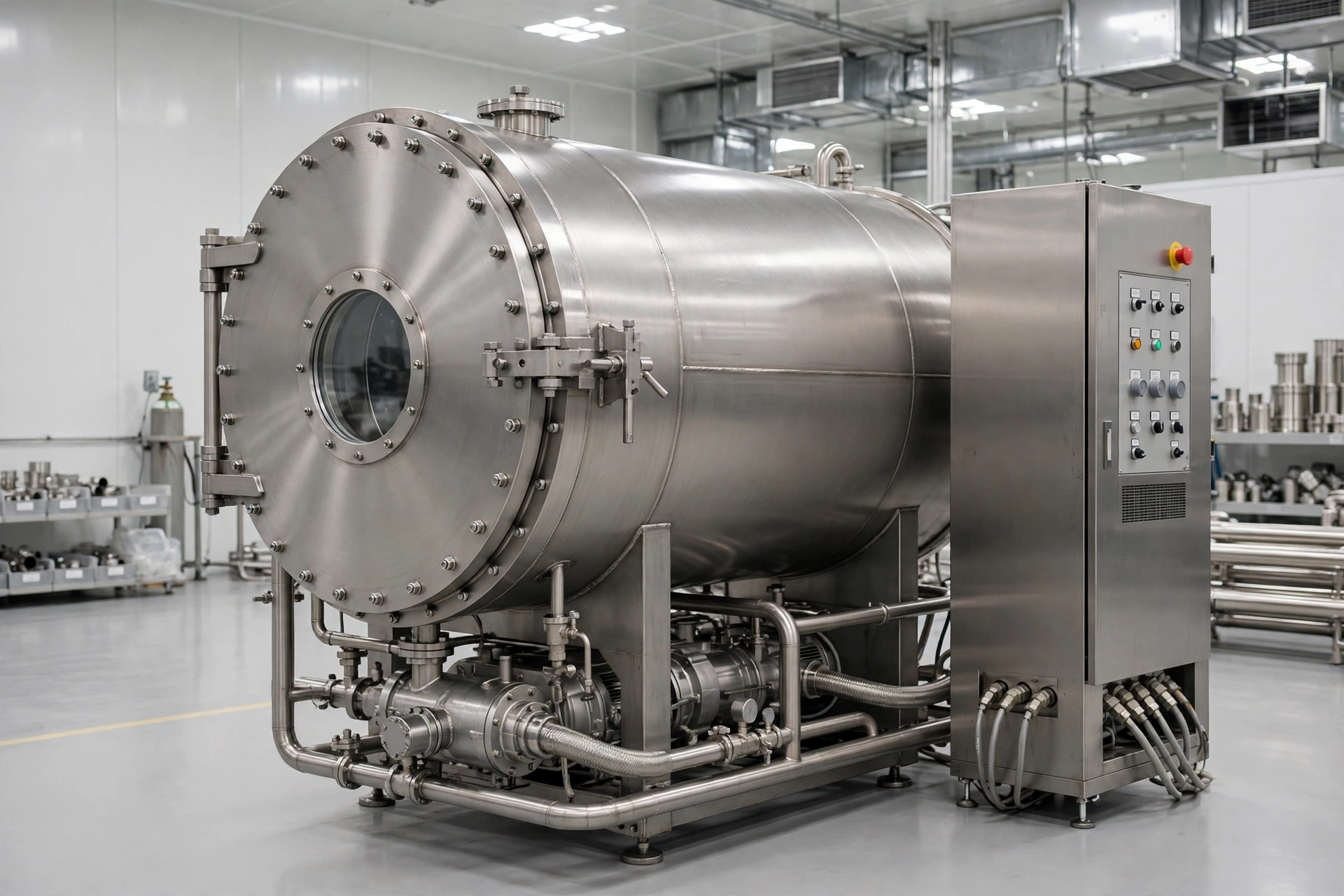
PVD is batch work: output is parts per cycle times cycles per day. Chamber diameter and height decide parts per cycle for your part shape, and fixturing decides how close to that theoretical load you get. A chamber one size up can double a batch — or sit half empty if your parts are small, which is why part dimensions come before any price talk.
Evaporative and multi-arc ion machines differ in sources, power supplies and film properties; hard-film requirements move the specification toward multi-arc. Colour targets and film thickness add targets and process time. Automation around the chamber — loading, rotation and control — is the third driver, and it scales with how many cycles per day you plan to run.
Send part material and size, the film or colour you want, and batches per day. The quotation will state chamber size and realistic parts per cycle for your geometry, which is the number your cost-per-part calculation should use.
Beyond purchase price, ask about target material consumption per cycle, pump maintenance intervals and cycle time at your film thickness. PVD economics are per-cycle economics: a cheaper chamber with a longer cycle can cost more per part than a faster one.
Suppose your part is a small hardware component and a chamber load holds 300 pieces with a two-hour door-to-door cycle. Across a ten-hour day that is roughly 1,500 parts at five cycles. A chamber one size larger holding 500 pieces at the same cycle time lifts daily output to about 2,500 without a second operator shift — but only if your daily demand is actually there. Below roughly one chamber's daily output, the smaller machine plus overtime flexibility is usually the better economics; above it, the larger chamber pays for itself in avoided second machines.
Ask every quotation to state parts per cycle for your part and the assumed cycle time. Those two numbers, not the chamber's headline size, are what your cost-per-part model should use.
Send part drawings, coating type and output target through the inquiry page; the reply will confirm the configuration and quotation.
Send your part drawings, part size and output target. We will confirm the machine or line configuration and reply with a quotation.